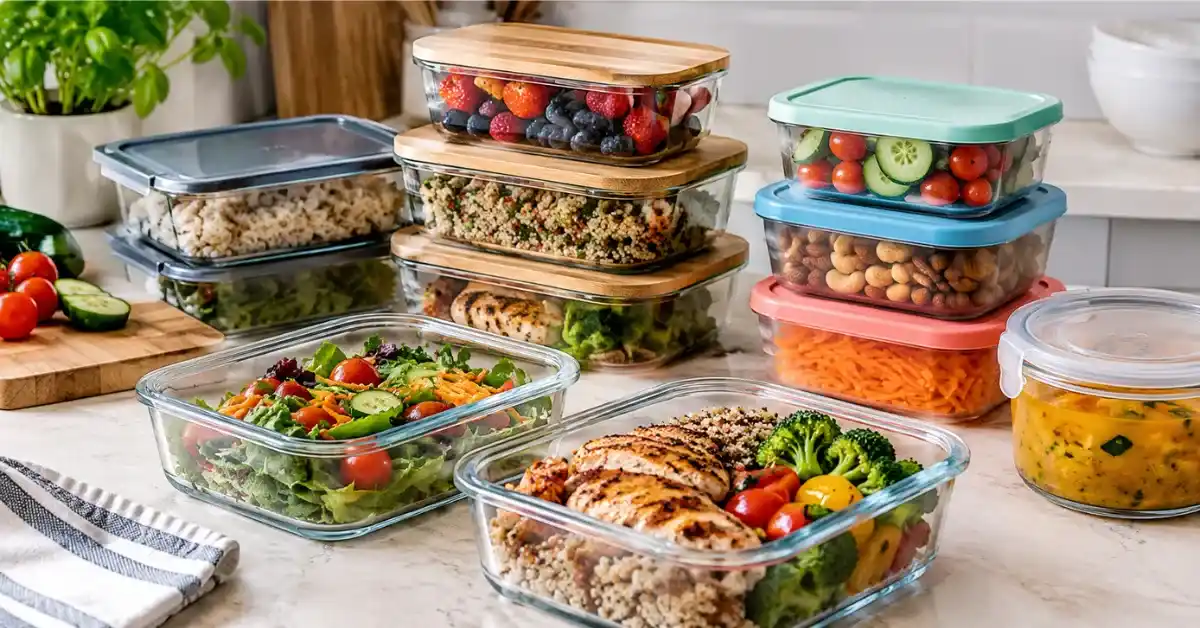
The best containers meal prep routines can use should keep food fresh, stack neatly, handle the type of storage you need, and make reheating or serving simple. For most households, the right choice is not a single container material or size. A practical meal-prep setup usually combines reusable plastic containers, glass containers, freezer-safe options, and a few disposable containers for situations where convenience matters more than long-term reuse.
The container you choose also depends on what you are storing. Rice bowls, pasta, salads, soups, sauces, sandwiches, and freezer meals all have different storage needs. A container that works beautifully for a refrigerator lunch may be inconvenient for a frozen dinner or a meal you plan to microwave.
Good meal prep storage containers should therefore be judged by more than appearance. Lid security, portion size, durability, freezer compatibility, microwave use, ease of cleaning, stackability, and material all matter.
What Makes a Good Meal Prep Container?
A good meal prep container should make your weekly cooking routine easier rather than create another problem to manage.
Before buying a large set, consider how you actually prepare food. Someone who cooks three lunches for work may need several medium containers, while a family preparing dinners for an entire week may need larger containers that can move from the freezer to the refrigerator.
Here are the main qualities worth considering:
| Feature | Why It Matters | Best For |
| Leak-resistant lid | Helps prevent spills in lunch bags and refrigerators | Soups, sauces, lunches |
| Stackable shape | Saves refrigerator and freezer space | Weekly meal prep |
| Microwave compatibility | Makes reheating convenient | Ready-to-eat lunches |
| Freezer compatibility | Allows meals to be stored longer | Batch cooking |
| Durable material | Reduces cracking and replacement | Frequent meal prep |
| Clear sides | Makes stored food easy to identify | Busy households |
| Multiple sizes | Handles different portions | Families and varied meals |
| Easy cleaning | Reduces cleanup time | Frequent use |
| BPA-free construction | Useful for shoppers seeking BPA-free food containers | Everyday storage |
No container has to excel at every category. The goal is to match the container to the way you cook and store food.
The Best Types of Containers for Meal Prep
There are several useful categories of meal prep containers, and each has a place in a well-organized kitchen.
1. Glass Meal Prep Containers
Glass is a popular option for people who want sturdy, reusable containers that can handle refrigerator storage and, when specifically designed for it, microwave reheating.
The biggest advantage of glass is that it does not retain food odors as readily as some plastics can. It is also easy to see what is inside, and many glass food-storage systems use straight-sided containers that stack efficiently.
Glass containers work especially well for:
- Pasta and grain bowls
- Roasted vegetables
- Chicken and other cooked proteins
- Casseroles
- Leftovers
- Saucy meals
- Make-ahead dinners
Weight is the main drawback. A large glass container can be considerably heavier than a comparable plastic container, which may matter if you carry several meals to school, work, or other activities.
Glass can also break if dropped or handled roughly. For that reason, it may be more practical for home meal prep than for situations where containers are frequently transported.
When using glass in a microwave, check the manufacturer’s instructions rather than assuming every glass container is microwave-safe. The same applies to lids, since a glass base and its plastic lid may have different usage limitations. FDA guidance notes that some plastic containers can melt when used in a microwave, so container-specific instructions matter.
2. Reusable Plastic Meal Prep Containers
Reusable plastic containers are often the most convenient choice for everyday meal prep.
They are lightweight, easy to carry, generally inexpensive compared with many glass systems, and available in a huge range of shapes and sizes. A good reusable set can handle lunches, snacks, leftovers, chopped ingredients, and prepared dinners.
Look for containers that are:
- Clearly labeled for food storage
- Designed for the temperature range you need
- Easy to wash
- Securely lidded
- Suitable for refrigerator or freezer use when required
- Microwave-safe when reheating is part of your routine
Not every plastic container should automatically go into the microwave or freezer. Always follow the manufacturer’s instructions.
For people who transport meals regularly, reusable plastic can be particularly practical because the lighter weight makes several packed meals easier to carry.
3. BPA-Free Meal Prep Containers
If you specifically want meal prep BPA free containers, look for products that clearly state their material and intended food-contact use.
BPA, or bisphenol A, has been used in certain food-contact materials, and the FDA continues to maintain information about its approved uses and safety evaluations. The agency explains that food-contact materials are regulated according to their intended uses and potential migration into food.
Choosing BPA-free containers can be a personal preference for shoppers who want to avoid BPA-containing materials. However, BPA-free does not automatically tell you everything about a container’s performance.
You should still consider:
- Microwave instructions
- Freezer compatibility
- Lid quality
- Durability
- Cleaning requirements
- Temperature limitations
- Whether the container is intended for repeated use
A BPA-free label is one purchasing consideration, not a substitute for checking the complete product specifications.
4. Freezer Meal Prep Containers
The best meal prep freezer containers need to do more than simply hold food.
Freezing can expose containers to low temperatures and expansion as food freezes. A container designed for freezer storage should provide enough room for the food and should be specifically labeled for freezer use.
Freezer containers are useful for:
- Soups
- Chili
- Stews
- Cooked grains
- Pasta sauces
- Prepared casseroles
- Cooked meat dishes
- Batch-cooked meals
Leave appropriate space according to the manufacturer’s instructions rather than filling a container completely to the top. Liquids can expand as they freeze, so overcrowding can increase the chance of spills or container damage.
For quality, USDA guidance recommends keeping a freezer at 0°F or below. Frozen food can remain safe when continuously frozen, although quality can decline over longer periods.
5. Disposable Meal Prep Containers
Disposable meal prep containers are useful when washing and storing reusable containers is not practical.
They can work well for:
- Sharing meals with other people
- Food deliveries
- Large gatherings
- Temporary storage
- Portioning meals for events
- Sending leftovers home with guests
The biggest advantage is convenience. Once the meal has been eaten, the container does not have to return to your kitchen.
The tradeoff is that disposable containers are generally intended for limited use rather than becoming the core of a long-term meal-prep system. Their environmental impact, durability, temperature limitations, and recycling options also vary by material and location.
If you are buying disposable containers specifically for reheating, freezing, or storing hot food, check the package for those intended uses. Do not assume that a container suitable for room-temperature storage is automatically suitable for microwave or freezer use.
6. Compartment Meal Prep Containers
Compartment containers separate different foods in the same meal.
They are particularly useful when you want to keep foods apart until you are ready to eat them. For example, you might place cooked chicken and rice in separate sections and keep vegetables in another compartment.
They can be helpful for:
- Balanced lunch boxes
- Grain bowls
- Rice and protein meals
- Snacks
- Sandwich accompaniments
- Family lunches
The main limitation is flexibility. A compartment container that works perfectly for one meal may not suit another because the sections are fixed.
If you frequently prepare meals with several components, compartments can be convenient. If your meals vary significantly in portion size, separate containers may offer more flexibility.
7. Leak-Resistant Containers for Soups and Saucy Meals
Soups, curries, stews, sauces, and other liquid-heavy foods require containers with dependable lids.
A container that is perfectly adequate for dry foods may be a poor choice for soup. Even a small leak can create a mess inside a lunch bag or refrigerator.
When choosing containers for liquid meals, pay attention to:
- Lid design
- Seal construction
- Closure points
- Container orientation
- Manufacturer’s leak-resistant claims
A secure lid is particularly important when meals are being transported.
Do not fill liquid meals to the very top. Allowing some space can reduce spills and make closing the container easier.
8. Meal Prep Tupperware and Similar Plastic Storage Systems
People often use “meal prep Tupperware” as a general term for reusable food-storage containers, although Tupperware is also a specific brand.
The concept is simple: use a coordinated collection of containers in different sizes so your refrigerator and pantry are easier to organize.
A practical collection might include:
- Small containers for sauces and snacks
- Medium containers for individual lunches
- Larger containers for family portions
- Deep containers for soups and stews
- Freezer-suitable containers for batch cooking
The benefit of using matching containers is organization. Similar shapes stack more predictably, and matching lids can reduce the frustrating search for the right top.
9. Stainless Steel Food Containers
Stainless steel containers are another reusable option, particularly for foods that do not need to be reheated directly in the container.
They are durable, lightweight compared with some glass containers, and useful for packed lunches and snacks. They can be especially practical when you want a container that can handle regular transportation.
The important limitation is microwave use. Metal containers should not be placed in a microwave unless the specific appliance and container manufacturer explicitly provide compatible instructions. FDA guidance notes that metal can reflect microwaves and may cause uneven cooking or damage the appliance.
For cold lunches, snacks, and foods you plan to transfer to another dish for reheating, stainless steel can be a useful part of a meal-prep system.
Glass vs. Plastic Meal Prep Containers
The choice between glass and plastic often comes down to how you use your containers.
| Consideration | Glass | Reusable Plastic |
| Weight | Heavier | Lighter |
| Durability | Can break if dropped | Generally resistant to drops |
| Odor retention | Usually low | Can vary by material and food |
| Transport | Less convenient for many meals | Convenient |
| Microwave use | Often suitable when labeled | Only when specifically labeled |
| Freezer use | Possible with suitable products | Many products are designed for it |
| Visibility | Usually excellent | Usually excellent |
| Everyday portability | Moderate | High |
| Best use | Home storage and reheating | Portable meal prep |
Neither material is automatically right for every kitchen.
If you mostly prepare meals at home and reheat them throughout the week, glass may fit your routine well. If you carry multiple meals around, reusable plastic may be more convenient because of its lighter weight.
Many households can benefit from having both.
What Size Containers Should You Use?
Container size should match the meal rather than simply being as large as possible.
Small containers are useful for:
- Dips
- Dressings
- Sauces
- Nuts
- Fruit
- Small snacks
Medium containers are practical for individual lunches and dinners.
Larger containers can hold family-sized portions, casseroles, large salads, cooked grains, or batch-prepared ingredients.
Using the right size has two advantages. It helps organize the refrigerator, and it reduces the amount of empty space around individual portions.
However, avoid packing food tightly simply to fill a container. The goal is practical storage, not maximum volume.
Are Meal Prep Containers Microwave Safe?
Some are, and some are not.
Never assume that a container is microwave-safe simply because it is made from plastic or glass. Look for the manufacturer’s microwave-use instructions and check whether the lid has separate limitations.
FDA guidance explains that glass, paper, ceramic, and some plastics may be used in microwave cooking, while some plastics can melt from the heat of food.
A useful meal-prep routine is to check the container before purchasing a full set if reheating is important to you.
You should also pay attention to the lid. A container base may be suitable for reheating while the lid needs to be removed or vented according to the manufacturer’s instructions.
For especially hot or greasy foods, following the manufacturer’s temperature guidance is more reliable than assuming all food-storage plastics behave the same way.
How to Choose Containers for Freezer Meal Prep
Freezer storage changes the requirements slightly.
When selecting meal prep freezer containers, look for products specifically identified as freezer-safe. Choose a shape that fits your freezer shelves and drawers, and consider whether the containers can stack.
Before freezing a prepared meal:
- Let the food cool appropriately before storage.
- Portion it into suitable containers.
- Avoid overfilling.
- Close the container securely.
- Label the contents and date when useful.
- Place it in the refrigerator or freezer promptly according to safe food-handling practices.
USDA recommends storing perishable food at 40°F or below in the refrigerator and 0°F or below in the freezer.
For leftovers, USDA also recommends using refrigerated leftovers within 3 to 4 days or freezing them for longer storage.
The container protects the food, but it does not replace proper temperature control.
How to Store Meal Prep Safely
A great container cannot make unsafe storage safe.
Cooked food should be handled and refrigerated promptly. USDA recommends dividing leftovers into shallow containers to encourage faster, more even cooling. Refrigerated leftovers are generally used within 3 to 4 days.
For meal preppers, this makes container shape important. A shallow container can be more practical for cooling than a very deep container packed with a large amount of hot food.
Keep your refrigerator at 40°F or below, and keep your freezer at 0°F or below.
Labeling containers with the meal name and preparation date is also useful, especially when several meals look similar.
For example:
Chicken rice bowl | Sunday
That simple label can prevent the mystery-container problem that develops when several identical containers sit in the refrigerator.
How Many Meal Prep Containers Do You Need?
There is no universal number.
A person preparing five lunches for one week might need five medium containers, while a family preparing breakfasts, lunches, dinners, snacks, and freezer meals could use many more.
Instead of buying the largest set available, think about your normal cooking cycle.
If you prep once per week, consider how many individual meals you usually make at one time. Then add a few smaller containers for sauces, toppings, snacks, or ingredients.
It can also help to have more lids than you think you need. Lids are often the part that gets misplaced, while the container itself remains perfectly usable.
What Containers Work Best for Different Foods?
Different foods benefit from different shapes and materials.
| Food | Useful Container Type | Why |
| Soup | Leak-resistant, deep container | Reduces spills |
| Salad | Medium container with separate dressing storage | Helps preserve texture |
| Rice bowls | Medium rectangular container | Easy portioning and stacking |
| Pasta | Glass or sturdy reusable plastic | Good for storage and reheating when rated |
| Casseroles | Larger glass container | Useful for family portions |
| Snacks | Small reusable containers | Keeps portions organized |
| Frozen meals | Freezer-safe container | Designed for low temperatures |
| Sauces | Small leak-resistant container | Prevents mess |
| Sandwiches | Shallow container | Helps prevent crushing |
| Mixed lunches | Compartment container | Keeps foods separated |
The best container is therefore partly determined by the food itself.
A container that works for a sandwich does not necessarily make sense for soup, and a container designed for freezer meals may be unnecessarily bulky for a small snack.
How to Build a Practical Meal Prep Container Set
You do not need dozens of identical containers.
A flexible kitchen setup can include a mixture of sizes and a couple of materials.
For example, a basic collection might consist of:
- Several medium containers for individual meals
- A few small containers for sauces and snacks
- A few larger containers for family portions
- Several freezer-safe containers
- A small group of glass containers for home reheating
- A few disposable containers for sharing or occasional events
The exact combination depends on your household.
If you regularly prepare food for one person, prioritize individual portions. If you cook for a family, larger containers may be more useful. If you meal prep lunches for work, prioritize medium containers that are easy to stack, transport, and reheat. If you freeze most of your meals, prioritize freezer-safe shapes that stack efficiently.
Common Meal Prep Container Mistakes
Even a good container set can become frustrating when the wrong storage habits are used.
Buying Only One Size
A kitchen full of identical containers sounds organized, but it can become inconvenient. Different foods need different amounts of space.
Ignoring the Lids
The container itself may be excellent, but a poor lid can make the entire system frustrating. Check how securely the lid closes and whether replacement lids are available when possible.
Assuming Every Container Is Microwave Safe
Microwave compatibility should always be confirmed through the manufacturer’s instructions. This is particularly important for plastic containers.
Filling Freezer Containers Too Full
Liquids can expand as they freeze. Follow the manufacturer’s guidance and leave suitable space rather than filling the container to the rim.
Storing Food for Too Long
A container does not extend the safe refrigerator life of food indefinitely. USDA guidance generally recommends using refrigerated leftovers within 3 to 4 days.
Choosing Containers That Are Difficult to Clean
If a lid has complicated grooves or seals that are difficult to wash, the convenience of meal prep can quickly disappear.
Buying More Containers Than You Can Store
A huge set is not automatically better. Your refrigerator, cabinets, and dishwasher all have limited space.
How to Keep Meal Prep Containers Organized
Organization starts with choosing containers that fit together.
Rectangular containers often make efficient use of refrigerator space because they leave fewer awkward gaps than some round shapes.
Keep lids together in one location rather than storing each lid underneath a container. If you have many containers, group them by size.
A simple system might be:
Small: sauces and snacks
Medium: individual meals
Large: family portions and batch cooking
Freezer: meals prepared for later
This makes meal prep faster because you can select the appropriate size without searching through the entire cabinet.
How to Clean and Maintain Reusable Containers
Wash reusable containers according to the manufacturer’s instructions.
Pay particular attention to lids, seals, corners, and grooves where food residue can remain. If a container develops deep scratches, cracks, warped areas, or a damaged seal, consider replacing it rather than continuing to use it.
Glass can generally be easier to inspect for residue because its surface is transparent, while some plastic containers can become cloudy or stained over time.
Strongly colored foods such as tomato-based sauces can also stain some plastics. Staining does not necessarily mean a container is unusable, but persistent odors, cracks, or damaged surfaces are good reasons to reconsider whether it should remain in regular rotation.
Best Containers for Meal Prep on a Budget
You do not need premium containers to create an effective meal-prep system.
Reusable plastic containers can be a practical starting point because they are generally lightweight and available in many sizes. Instead of buying a large assortment immediately, purchase enough for the meals you actually prepare.
Another budget-friendly approach is to use different container types for different jobs.
Use your durable reusable containers for meals you carry regularly, glass containers for home storage and reheating when appropriate, and freezer-safe containers for batch cooking. If you follow a gluten-free eating pattern, the same storage principles can also help when preparing gluten-free dinner meals ahead of time.
Disposable containers can be reserved for situations where you are giving food away or need temporary storage.
This approach avoids buying one expensive system that may not fit every part of your routine.
Are Reusable Containers Better Than Disposable Containers?
The answer depends on how you use them.
Reusable containers make sense when you prepare meals regularly and can wash and store them between uses. They can become part of a long-term meal-prep routine and reduce the need to repeatedly purchase single-use containers.
Disposable containers can make more sense for occasional events, food sharing, or situations where retrieving a container later would be inconvenient.
Rather than treating one type as universally better, consider the purpose.
For weekly meal prep at home, reusable containers are usually more practical. For sharing meals with a large group, disposable containers can simplify cleanup and reduce the need to collect containers afterward.
Frequently Asked Questions
What are the best containers for meal prep?
The best containers depend on your meals and storage habits. Glass works well for home storage and reheating when specifically rated for those uses, while reusable plastic is lightweight and convenient for transporting meals. Freezer-safe containers are important for batch cooking and long-term frozen storage.
Are glass meal prep containers better than plastic?
Glass and plastic each have advantages. Glass is heavier but can be convenient for home storage and reheating when the container is rated for microwave use. Plastic is usually lighter and easier to transport. The better choice depends on where and how you use the container.
Are reusable meal prep containers worth it?
Reusable containers can be useful for people who prepare meals regularly. They can be washed and used repeatedly, making them practical for weekly meal preparation, lunches, leftovers, and food storage.
Are disposable meal prep containers safe for reheating?
Only use a disposable container for reheating when its packaging or manufacturer specifically indicates that it is suitable for that purpose. Not every disposable container is designed for microwave use.
What are the best meal prep freezer containers?
Look for containers specifically labeled as freezer-safe, with secure lids and enough room for the food. Stackable shapes can also make freezer organization easier.
Can you microwave meal prep containers?
Some can, but not all. Check the manufacturer’s microwave instructions for both the container and its lid. FDA guidance notes that some plastic containers can melt from the heat of food, so microwave compatibility should not be assumed.
How long can meal prep stay in the refrigerator?
USDA guidance generally recommends using refrigerated leftovers within 3 to 4 days. Keep the refrigerator at 40°F or below and refrigerate food promptly.
What does BPA-free mean on meal prep containers?
BPA-free generally means the product is made without bisphenol A. If avoiding BPA is important to you, check the manufacturer’s material information. Also consider other features such as microwave and freezer compatibility, durability, and cleaning requirements.
Are compartment containers good for meal prep?
They can be useful when you want to keep different parts of a meal separate. They are especially convenient for lunches with several components, but separate containers may be more flexible when portion sizes and meal combinations change frequently.
How many containers do I need for weekly meal prep?
There is no fixed number. Start with the number of meals you normally prepare, then add a few small containers for sauces and snacks and several larger containers if you batch-cook family meals or freezer food.
Final Thoughts
The best containers meal prep can use are the ones that match the food you prepare, the way you store it, and how often you need to transport or reheat it.
For many kitchens, a combination works better than relying on one type. Reusable plastic containers are convenient for everyday lunches, glass can be useful for home storage and reheating when appropriately rated, freezer-safe containers support batch cooking, and disposable containers have a place when food needs to be shared or cleanup needs to stay simple.
Pay attention to container size, lid quality, storage compatibility, and ease of cleaning. Most importantly, remember that good containers are part of a larger food-storage routine. Keeping refrigerated food at 40°F or below, freezing food at 0°F or below, and using leftovers within recommended timeframes all matter just as much as the container itself.
A thoughtfully chosen set of meal prep storage containers can make weekly cooking easier, keep the refrigerator more organized, and make prepared meals much simpler to grab when you need them.